





Anna~Anna
"Flintville Annie"
© 2006-2015

The campaign to recall Wisconsin Governor Scott Walker is going swimmingly well -- so well, in fact that it must be making someone (or a group of folks) incredibly nervous.
Police in Sun Prairie, Wisc. said Monday they were investigating reports of death threats made against two activists supporting the recall of Gov. Scott Walker (R).
Wisconsin residents Heather DuBois Bourenane and Tom Peer, who live in Sun Prairie and Madison, respectively, said they received early morning phone calls on Thursday of last week warning that they would be murdered.
Peer says he was told, "If you don't stop circulating recall petitions, we will kill you."
You can check out this interview with both Peer and Bourenane on Daily Kos.
Let's hope that authorities take this seriously and find whomever is responsible for harassing and threatening law abiding citizens who are participating in our democracy. Or what's left of it. It's fine to disagree passionately and peacefully about politics, but to threaten someone's life over an election is absolutely heinous.

High Pressure Hydraulic Fracturing (or fracking) is a method of drilling for natural gas by pumping a mixture of water and toxic, cancer-causing chemicals deep underground, and it's already responsible for poisoning the groundwater in states across the country.
Fracking wells are spreading at an alarming rate. But even more alarming, thanks to the work of Dick Cheney and his infamous energy policy, Frackers don't have to disclose the chemicals used in their fluid, and the process is totally exempt from regulation under the Safe Drinking Water Act.
The FRAC Act, a bill that has been in the Senate since 2009, would correct both these problems. As public concern over fracking has grown, the bill has gained some momentum, but we still need more Senators actively working to pass it. Will you urge your Senator to support and work to pass the FRAC Act?
Tell you Senator: Co-sponsor the FRAC Act to protect our water from dangerous fracking.
If you've ever seen the picture of the man lighting his tap water on fire from the recent documentary Gasland, that was because of nearby fracking.1
Fracking a single gas well uses hundreds of thousands, or even millions of gallons of water, combined with hundreds of tons of chemicals including known toxics and carcinogens.
While the exact contents of the fluid is still a secret, scientific examination reveals that it often contains diesel fuel, which includes benzene, as well as methanol, formaldehyde and hydrochloric acid and many others.2
The fluid is injected thousands of feet underground at extremely high pressure, literally cracking the earth to release trapped gas. Unfortunately, it must pass through our water table, where the fluids, along with natural gas, can leak through well casings into our drinking water.
Yet somehow, the EPA has been handcuffed from regulating fracking to keep our water clean since 2005, in what has become known as "the Halliburton loophole." Halliburton, where Dick Cheney was CEO before becoming Vice President, patented fracking in the 1940's and remains the third largest producer of fracking fluids. And in trademark Bush administration style, Halliburton staff were actively involved in a 2004 EPA report on fracking safety.
The "Halliburton loophole" (Another Bush gift that keeps on giving)- remains a dangerous legacy of the Bush Administration and if we're going to protect our water, we need to close it.
Tell you Senator: Co-sponsor the FRAC Act to protect our water from dangerous fracking.
Fracking is currently underway in 36 states. The ramifications to our water from expanded, unchecked fracking will be extreme and are only beginning to be fully realized by the public - thanks in no small part to the continued resistance of industry to disclose the poisons it involves.
An important investigative series by the New York Times recently concluded that "the dangers to the environment and health are greater than previously understood."3
In addition to toxic, carcinogenic fluids which remain underground after a well is fracked, fracking also produces substantial quantities of waste water which can be literally radioactive. According to the Times, the water is "sometimes hauled to sewage plants not designed to treat it and then discharged into rivers that supply drinking water, contains radioactivity at levels higher than previously known, and far higher than the level that federal regulators say is safe for these treatment plants to handle."
What's more, above ground spills of toxic fracking fluids are becoming increasingly common. A large spill this April in Pennsylvania dumped thousands of gallons into fields and streams, eerily, on the one year anniversary of the Deep Water Horizon oil spill.
The oil and gas industry is the only industry in America that is allowed by EPA to inject known hazardous materials -- unchecked -- directly into or adjacent to underground drinking water supplies.
While some state regulations do exist, they vary widely. But water contamination isn't constrained by state boundaries, and we need a strong baseline national standard to make sure fracking chemicals are publicly disclosed everywhere fracking is taking place, and that this practice isn't putting our nation's drinking water at risk.
Tell you Senator: Co-sponsor the FRAC Act to protect our water from dangerous fracking.
We'll deliver your petition to the Senators who have not yet co-sponsored the FRAC Act. The ten current sponsors and co-sponsors are Boxer (CA), Cardin (MD), Casey (PA), Feinstein (CA), Gillibrand (NY), Lautenberg (NJ), Mikulski (MD), Sanders (VT), Schumer (NY), Whitehouse (RI)
1. Burning Tap Water and More: GASLAND Exposes the Natural Gas Industry," Treehugger, June 25, 2010.
2. Hydraulic Fracturing 101," EARTHWORKS.
3. Regulation Lax as Gas Wells' Tainted Water Hits Rivers," New York Times, February 26, 2011
| Native American Horoscope | |
| When you look at the Qualities of the Medicine Wheel you will notice dates and an animal names. For simplicity sake, you can pick the date you were born and learn more about the animal and the Characteristics of that area on the Medicine Wheel.Remember, that in each quadrant of the Medicine Wheel we learn things about ourselves. We are always changing and may take on other attitudes of another area. We are never really totally one certain trait all the time. We may have the general qualities of one animal, however, we can take on the heir of others in order to learn more about ourselves. That is the spiraling beauty of the Medicine Wheel | |
| |  |
| | |
| |  |
| | |
| | |
| | |
| | |
| | |
| | |
| | |
| | |
| | |
| | |
| | |
| | |
| | |
| | |
| | |
| | |
| | |
| | |
| | |
| | |
| | |
| | |

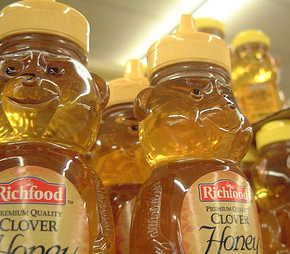
As if bees weren’t having a hard enough time of it lately, now there’s this: According to a report released last week by Food Safety News, the vast majority of store-bought honey sold in this country isn’t technically honey.
You see, the Food and Drug Administration requires any product labeled “honey” to contain pollen, which is reasonable enough. Unfortunately, many manufacturers seem to disagree—testing done for Food Safety News revealed that 76 percent of grocery store products claiming to be honey do not actually contain pollen. Instead, the substance lurking within the confines of those innocent-looking plastic bears is merely ultrafiltered golden sludge that probably came from China.
Ultrafiltering is a process that waters down honey and removes much of its nutritional value along with its pollen. The reason that Chinese producers love ultrafiltering is simple: honey laundering.
Like American corn, Chinese honey is cheap and heavily subsidized. In 2001, the Federal Trade Commission began imposing high tariffs on it because its abundance on the U.S. market had been driving American honey producers out of business. Since pollen is the only sure way to determine where honey originates, ultrafiltering has made it possible for the Chinese to continue dumping their honey on the U.S., often by channeling it through other countries.
And if that’s not shady enough, Chinese honey has been found to contain illegal animal antibiotics. A decade ago, tainted honey that came to the U.S. through Canada was sold to Smucker’s and Sara Lee, resulting in the recall of 12,000 cases of honey and a half-million loaves of bread.
A rep for the FDA told FSN that the organization hasn’t halted any honey imports because it has “yet to detect ‘ultra-filtered’ honey.” But should it be detected, “we will refuse entry.” Given that many in the honey industry expressed doubt that the FDA checks more than five percent of honey imports, that’s cold comfort for both consumers and bees.
Until the FDA steps up its game, you might want to be careful about where you buy. Food Safety News's tests, which were conducted by “one of the nation’s premier melissopalynologists,” found that 100 percent of honey sampled from big drugstore chains contained no pollen, as did 77 percent of the honey from big-box stores like Walmart and Costco, and 76 percent of the honey from grocery chains including Kroger, Safeway, and Giant Eagle. One bee expert told FSN that “unless you’re buying from a beekeeper, you’re at risk.”
The good news is that consumers do have a modicum of power: All of the honey FSN sampled from food co-ops, farmers’ markets, and “natural” chains like Trader Joe’s and PCC contained the full amount of pollen. And while those sources won’t do much to stem the tide of dodgy honey flowing from China, it’s probably best to take sweet relief where you can find it.
Image source: Flickr member cthoyes under Creative Commons

| Rating: | ★★★ |
| Category: | Other |


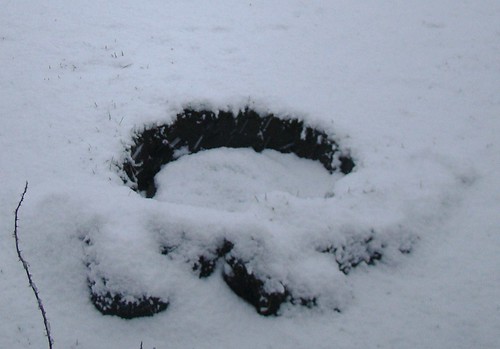
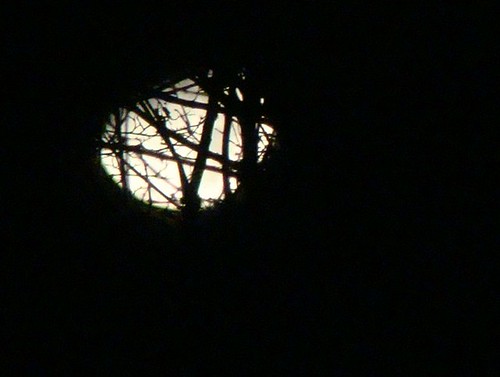
 Full Moon- with an angel around it.

 .........

| Rating: | ★★★★★ |
| Category: | Other |
